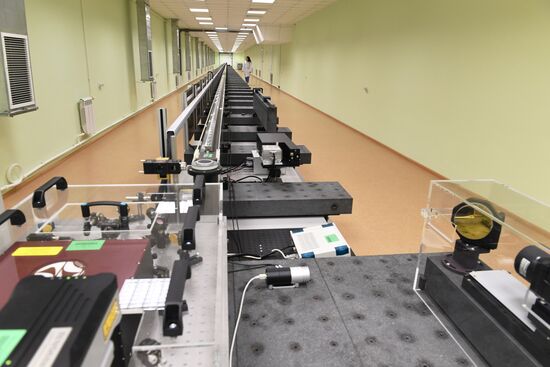
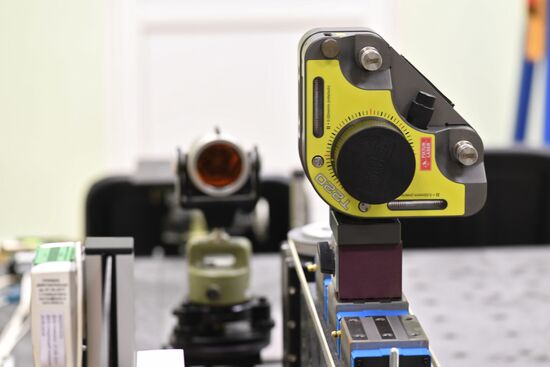
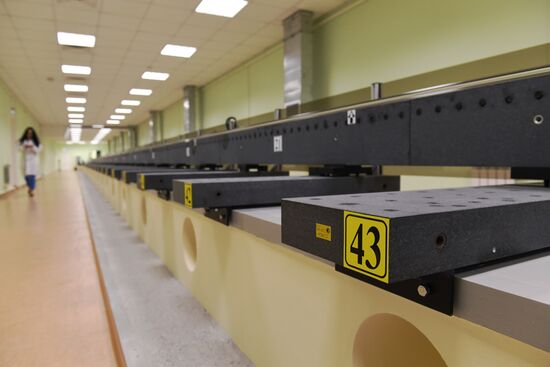
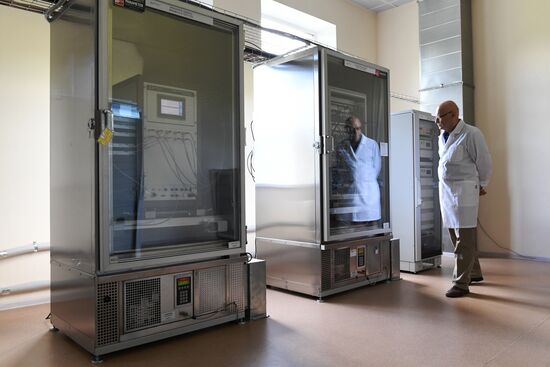
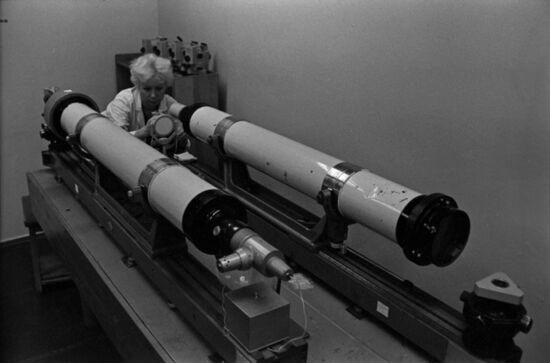
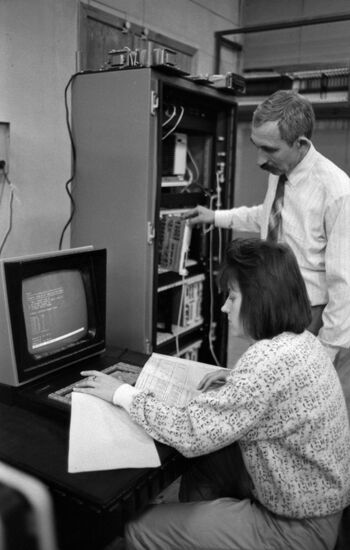
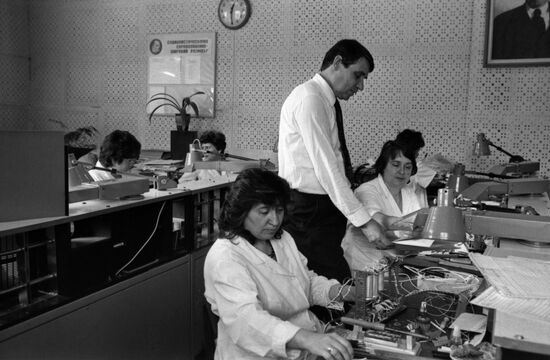
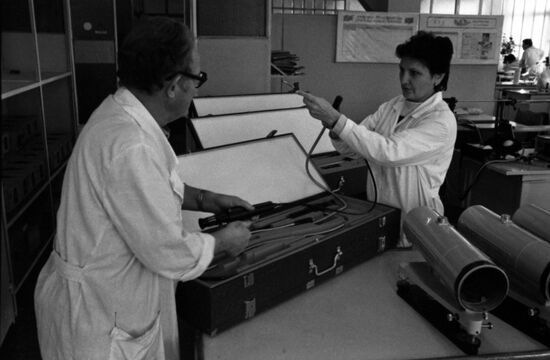
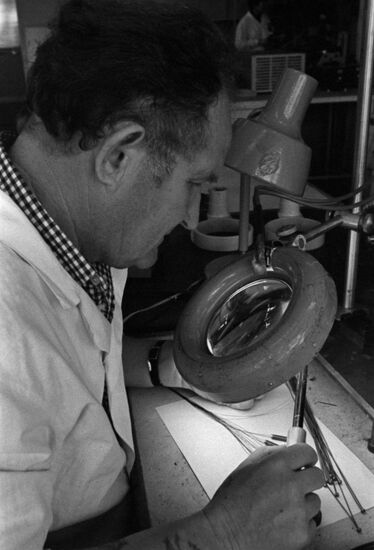
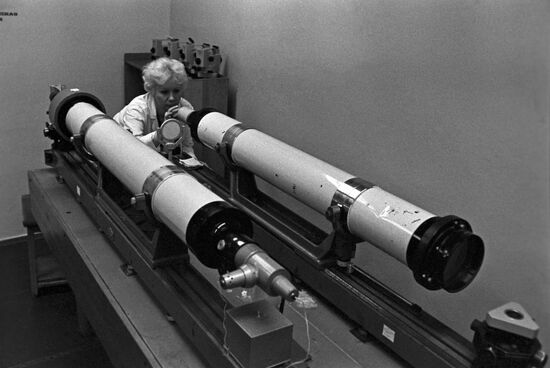
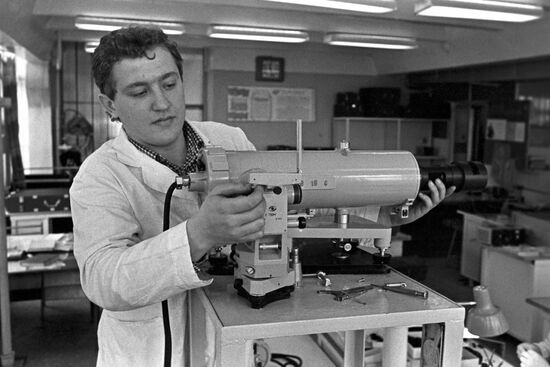
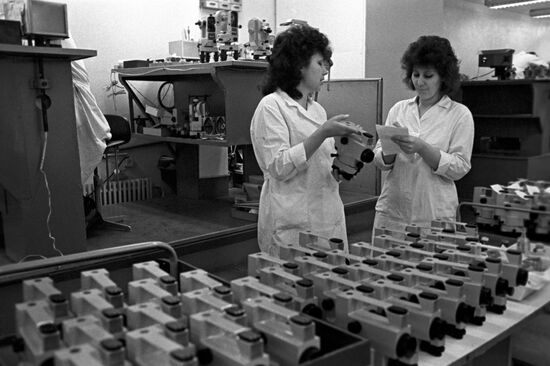
A standard measuring complex within the range of up to 60 meters. It is used for checks, calibrations and testing to approve types of working standards of length, high-precision electronic tacheometers, trackers, interferometers, laser rulers and other devices of measuring the length and for carrying out a number of research and development works.08.08.2018#5606741
Equipment of the standard measuring complex within the range of up to 60 meters. It is used for checks, calibrations and testing to approve types of working standards of length, high-precision electronic tacheometers, trackers, interferometers, laser rulers and other devices of measuring the length and for carrying out a number of research and development works.08.08.2018#5606744
A standard measuring complex within the range of up to 60 meters. It is used for checks, calibrations and testing to approve types of working standards of length, high-precision electronic tacheometers, trackers, interferometers, laser rulers and other devices of measuring the length and for carrying out a number of research and development works.08.08.2018#5606742
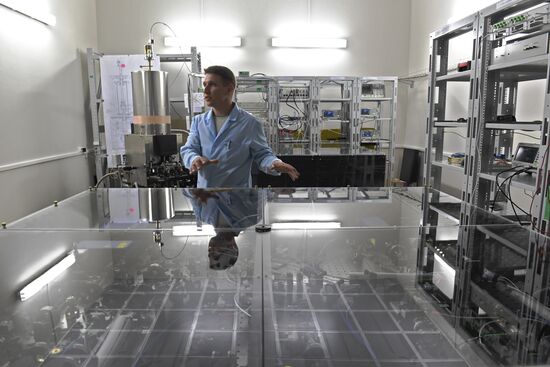
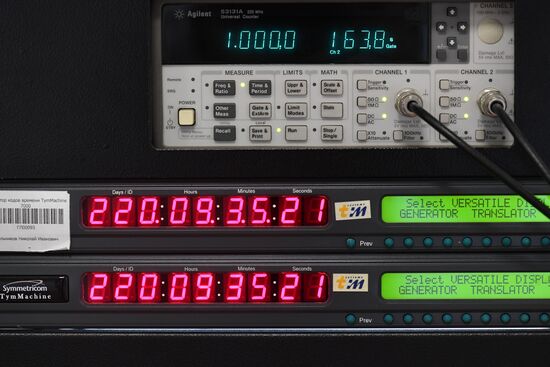
An institute's employee is seen here near chronotrons with rubidium frequency standard. The rubidium frequency standard is a kind of quantum frequency standards.08.08.2018#5606749
An institute's employee is seen here near chronotrons with hydrogen frequency standard. The hydrogen frequency and time standard can be used a maser of highly stable, highly precise and spectrally clean signals.08.08.2018#5606751
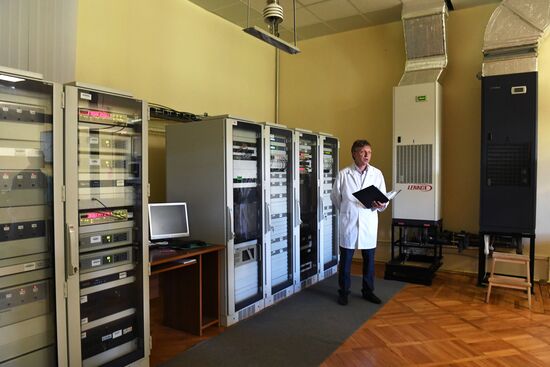
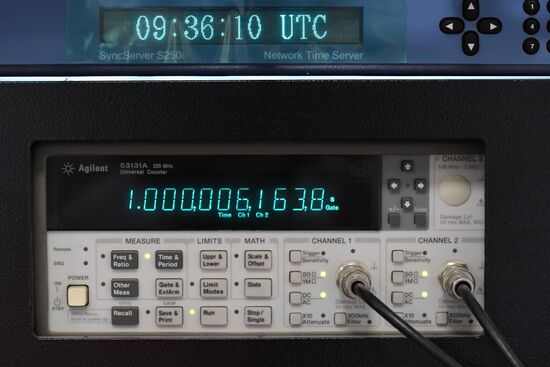
An institute's employee is seen here in the State Time Service premises. The State Time Service carries out research, technical and metrological activities to reproduce the national scle of time and calibrating frequencies, and to determine the parameters of the Earth's rotation.08.08.2018#5606754
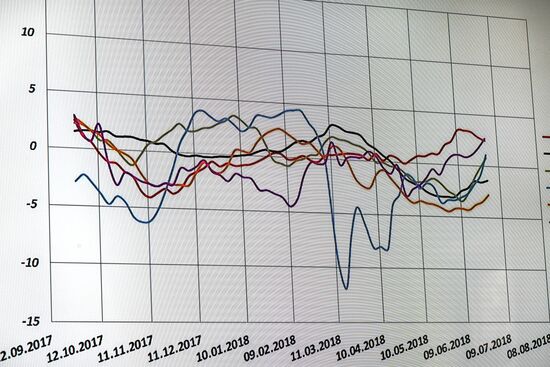
A graph showing variance of national time scales from Coordinated Universal Time (UTC) with the red line showing the Russian scale.08.08.2018#5606758
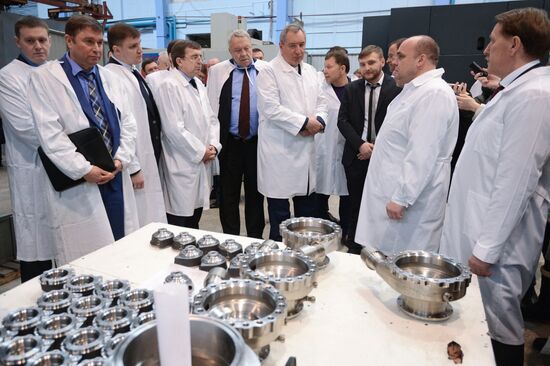
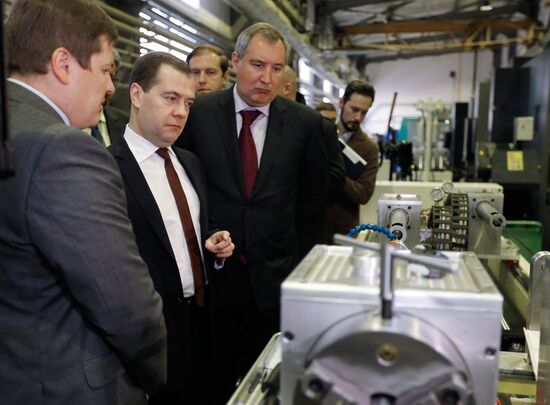
Russian Deputy Prime Minister Dmitry Rogozin, center, during his visit to Voronezh Mechanical Plant.28.01.2017#3017607
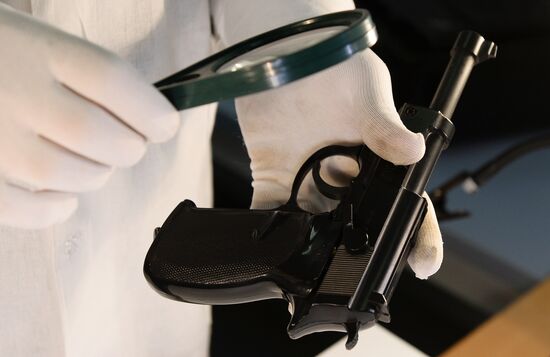
A customs forensics expert demonstrates a gun at a laboratory of the Central Customs Criminal Department of the Federal Customs Service.23.09.2015#2704451
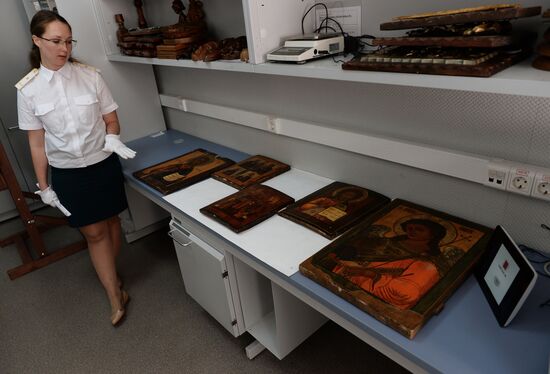
A customs forensics expert demonstrates icons at a laboratory of the Central Customs Criminal Department of the Federal Customs Service.23.09.2015#2704450
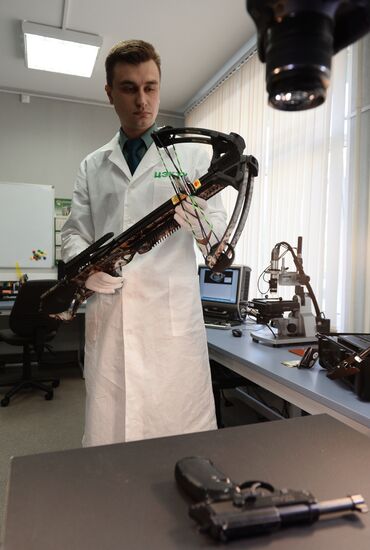
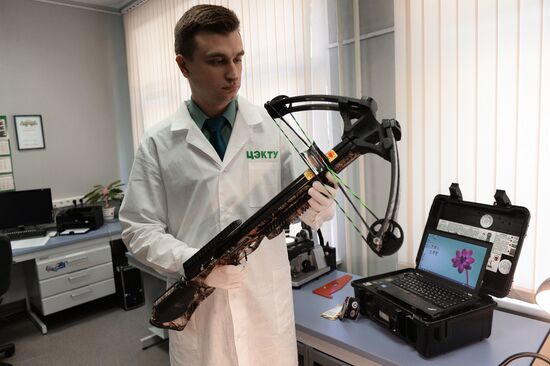
A customs forensics expert demonstrates a crossbow at a laboratory of the Central Customs Criminal Department of the Federal Customs Service.23.09.2015#2704425
A customs forensics expert demonstrates a crossbow at a laboratory of the Central Customs Criminal Department of the Federal Customs Service.23.09.2015#2704421
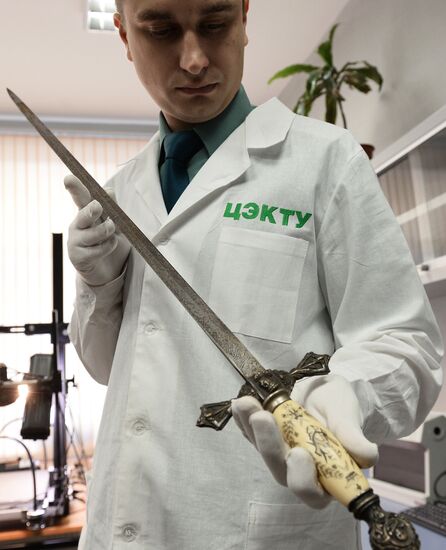
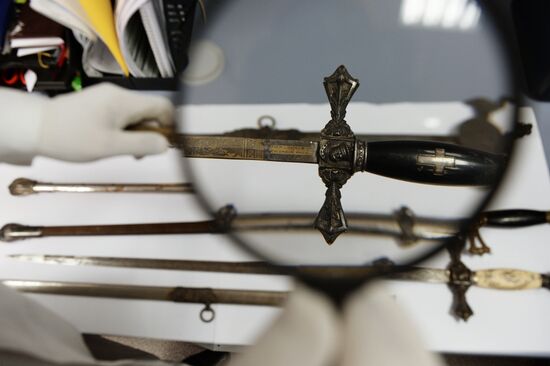
A customs forensics expert demonstrates a sword at a laboratory of the Central Customs Criminal Department of the Federal Customs Service.23.09.2015#2704419
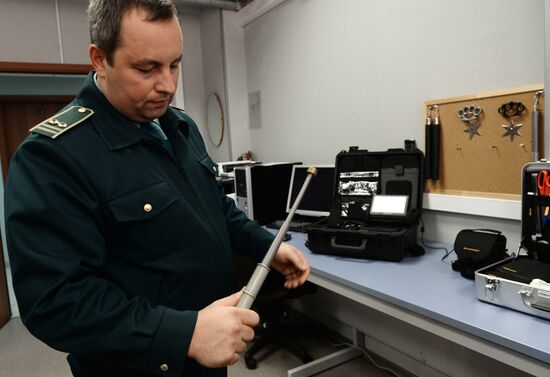
A customs forensics expert demonstrates an expandable baton at a laboratory of the Central Customs Criminal Department of the Federal Customs Service.23.09.2015#2704424
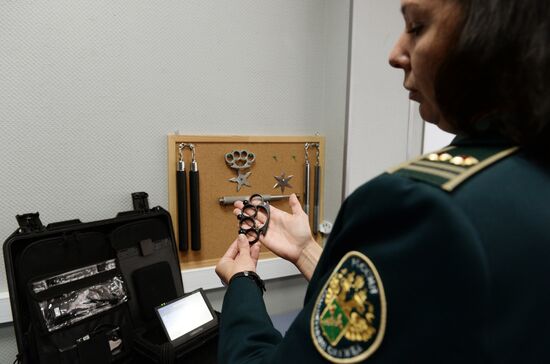
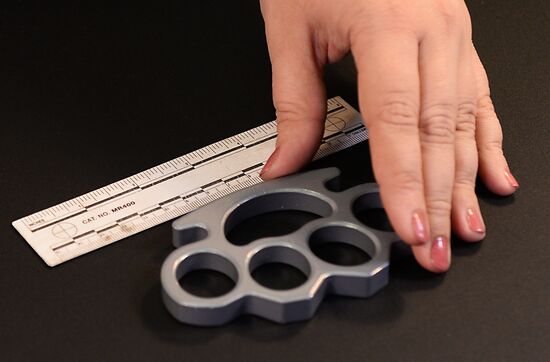
A customs forensics expert demonstrates brass knuckles at a laboratory of the Central Customs Criminal Department of the Federal Customs Service.23.09.2015#2704423
A customs forensics expert demonstrates a sword handle at a laboratory of the Central Customs Criminal Department of the Federal Customs Service.23.09.2015#2704422
A customs forensics expert demonstrates brass knuckles at a laboratory of the Central Customs Criminal Department of the Federal Customs Service.23.09.2015#2704418
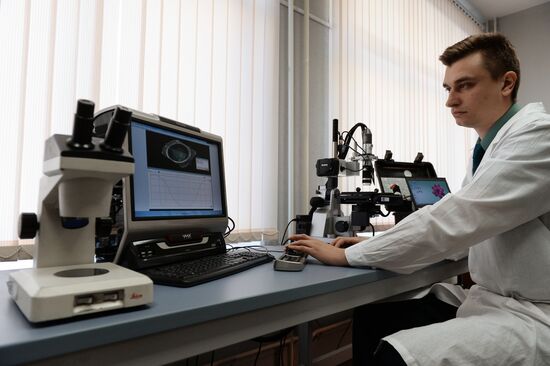
A customs forensics expert demonstrates research on modern high-precision equipment at a laboratory of the Central Customs Criminal Department of the Federal Customs Service.23.09.2015#2704417
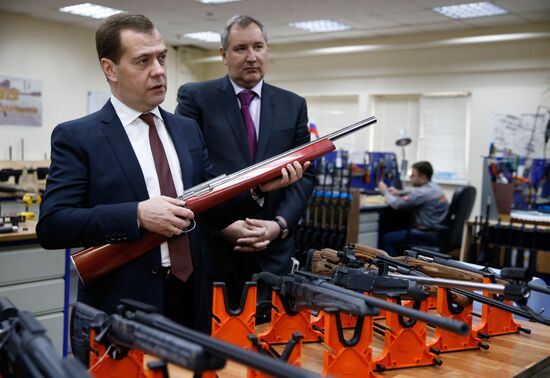
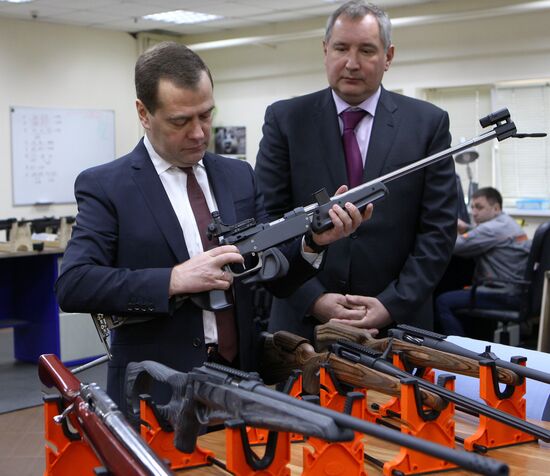
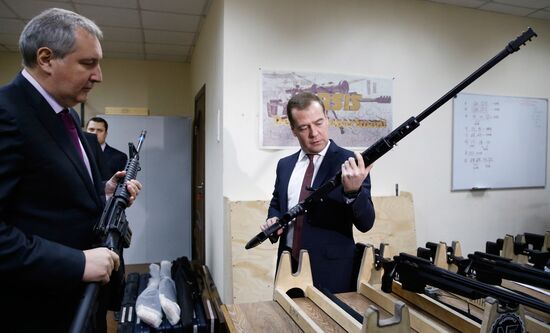
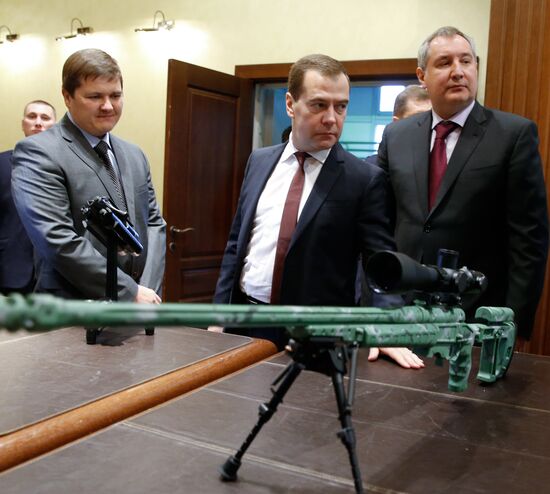
Prime Minister Dmitry Medvedev, left, examines samples of the Russian-made small weapons during his visit to the Promtechnologies Group in Moscow. Right: Deputy Prime Minister Dmitry Rogozin.19.11.2013#2322479
Prime Minister Dmitry Medvedev, left, examines samples of the Russian-made small weapons during his visit to the Promtechnologies Group in Moscow. Right: Deputy Prime Minister Dmitry Rogozin.19.11.2013#2322439
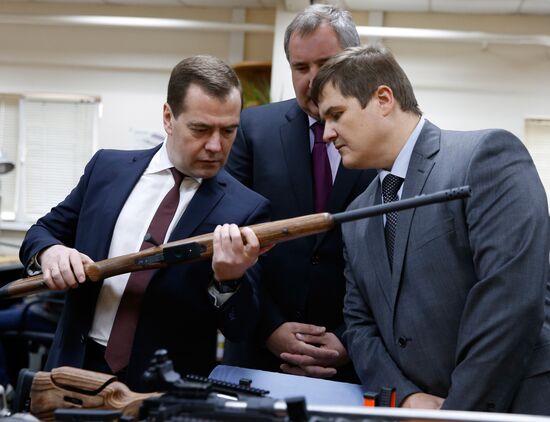
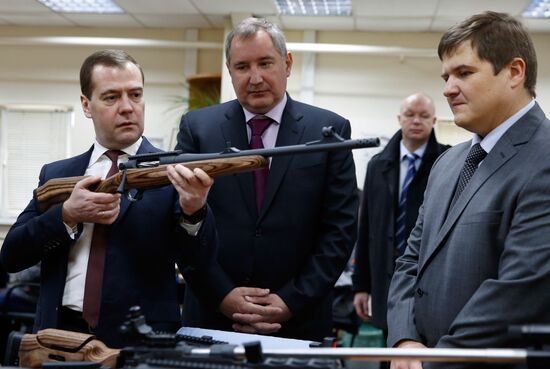
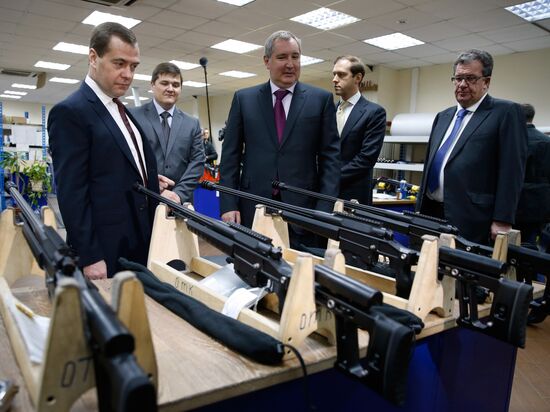
November 19, 2013. Prime Minister Dmitry Medvedev, left, examines samples of the Russian-made small weapons during his visit to the Promtechnologies Group in Moscow. From right: Director General of the Promtechnologies Group Alexei Sorokin, Deputy Prime Minister Dmitry Rogozin.19.11.2013#2322463
November 19, 2013. Prime Minister Dmitry Medvedev, left, examines samples of the Russian-made small weapons during his visit to the Promtechnologies Group in Moscow. From right: Director General of the Promtechnologies Group Alexei Sorokin, Deputy Prime Minister Dmitry Rogozin.19.11.2013#2322458
November 19, 2013. Prime Minister Dmitry Medvedev, left, examines samples of the Russian-made small weapons during his visit to the Promtechnologies Group in Moscow. From right: Deputy Prime Minister Dmitry Rogozin.19.11.2013#2322436
Prime Minister Dmitry Medvedev, left, examines samples of the Russian-made small weapons during his visit to the Promtechnologies Group in Moscow. From right: Deputy Prime Minister and Chief of the Government Executive Office Sergei Prikhodko, Minister of Industry and Trade Denis Manturov and Deputy Prime Minister Dmitry Rogozin.19.11.2013#2322434
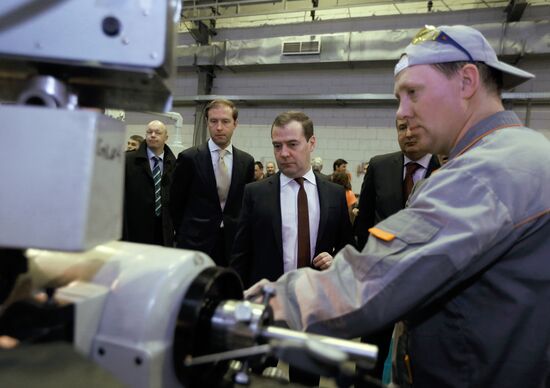
Prime Minister Dmitry Medvedev, center back, during his visit to the Promtechnologies Group in Moscow. From right back: Deputy Prime Minister Dmitry Rogozin and Minister of Industry and Trade Denis Manturov.19.11.2013#2322472
November 19, 2013. Prime Minister Dmitry Medvedev, second left, examines samples of the Russian-made small weapons during his visit to the Promtechnologies Group in Moscow. Left: Director General of the Promtechnologies Group Alexei Sorokin, third right - Deputy Prime Minister Dmitry Rogozin.19.11.2013#2322473
November 19, 2013. Prime Minister Dmitry Medvedev, center, examines samples of the Russian-made small weapons during his visit to the Promtechnologies Group in Moscow. Right: Deputy Prime Minister Dmitry Rogozin. Left: Director General of the Promtechnologies Group Alexei Sorokin.19.11.2013#2322435
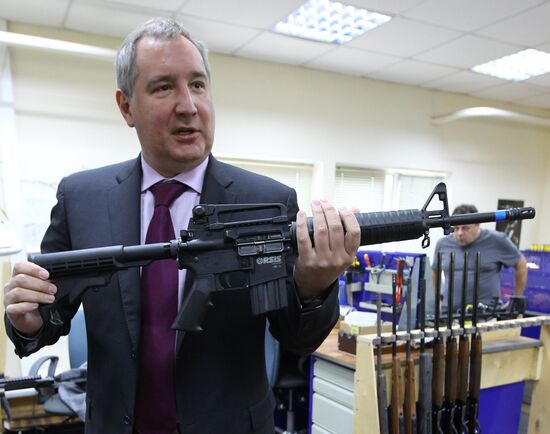
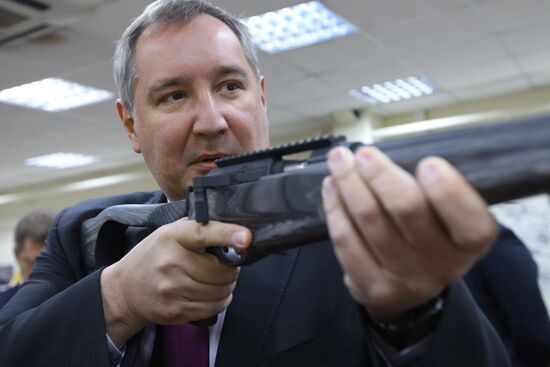
Deputy Prime Minister Dmitry Rogozin examines samples of the Russian-made small weapons during his visit to the Promtechnologies Group in Moscow.19.11.2013#2322438
Prime Minister Dmitry Rogozin examines samples of the Russian-made small weapons during his visit to the Promtechnologies Group in Moscow.19.11.2013#2322437
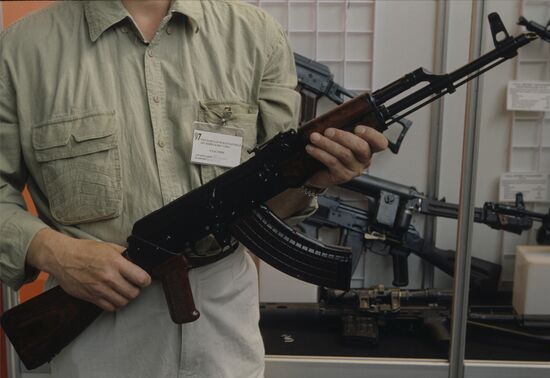
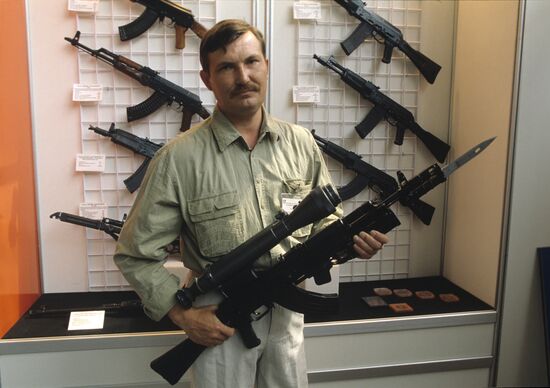
Mr. Yarkov, a representative of the Izhevsk Machine-Building Plant, demonstrates the third-generation AK-101 Kalashnikov assault rifle at the Moscow International Arms Exhibition in Sokolniki.01.07.1997#8285593
Mr. Yarkov, a representative of the Izhevsk Machine-Building Plant, demonstrates the third-generation AK-101 Kalashnikov assault rifle at the Moscow International Arms Exhibition in Sokolniki.01.07.1997#8285592
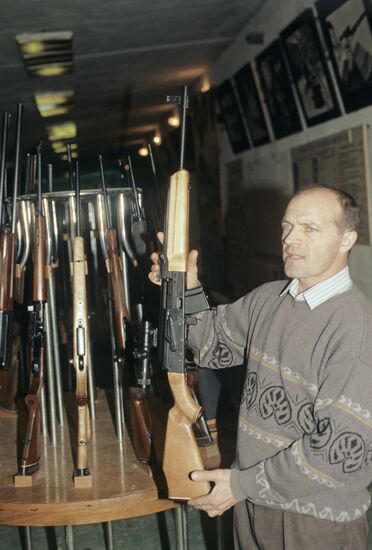
A staffer of the Central Research and Development Institute of Precision Machine-Building (CNIITOCHMASH), affiliated with Ministry of the Defense Industry of the Russian Federation, shows sporting and hunting rifles.26.03.1995#8468414
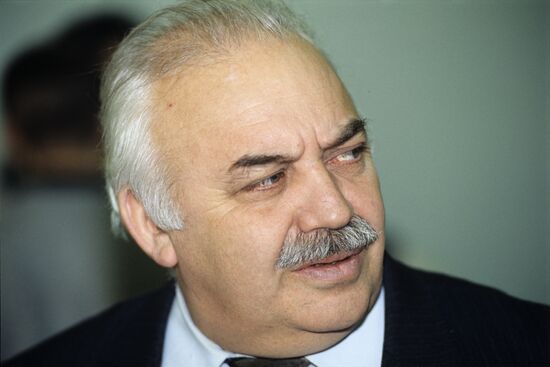
Alexander Khinikadze, General Director of the Central Research and Development Institute of Precision Machine-Building (CNIITOCHMASH), affiliated with Ministry of the Defense Industry of the Russian Federation.26.03.1995#8468413
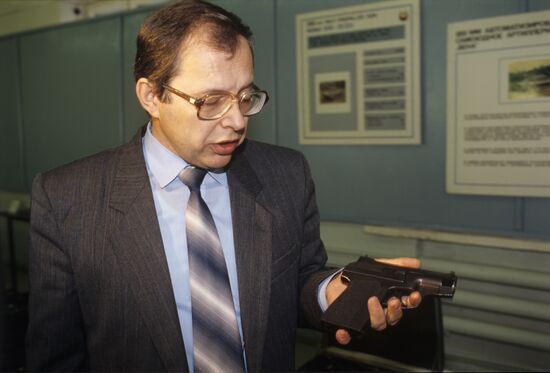
Nikolai Denisov, chief designer at the Central Research Institute of Precision Engineering of the Ministry of Defense Industry, demonstrates the PSS silent pistol (MSS "Vul") developed by his team.26.03.1995#8260517
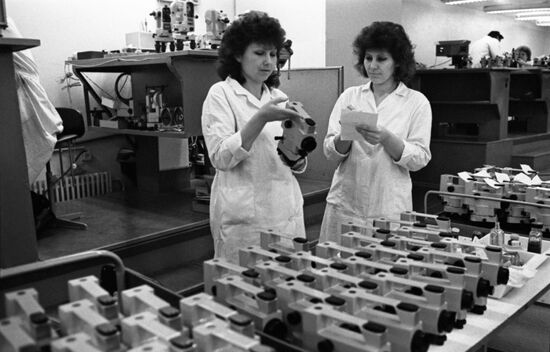
Kharkov Instrument-Making Plant named after Taras Shevchenko, Ukrainian SSR. A batch of geodetic levels.15.10.1991#6685981
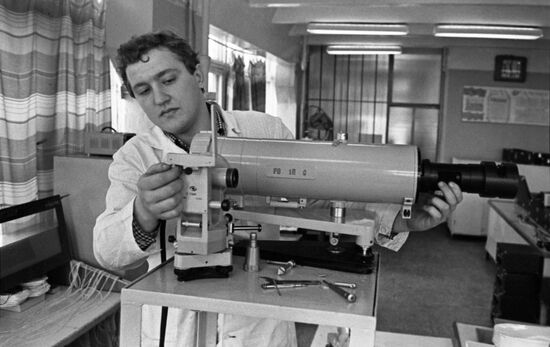
Kharkov Instrument-Making Plant named after Taras Shevchenko, Ukrainian SSR. Testing measuring instruments.15.10.1991#6685976
Kharkov Instrument-Making Plant named after Taras Shevchenko, Ukrainian SSR. A shop producing laser measuring instruments.15.10.1991#6685973
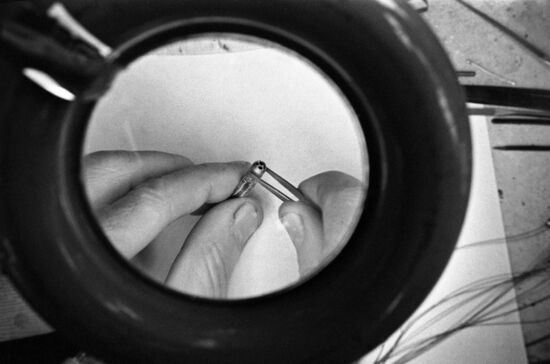
Kharkov Instrument-Making Plant named after Taras Shevchenko, Ukrainian SSR. Assembly of measuring device nodes.15.10.1991#6685972
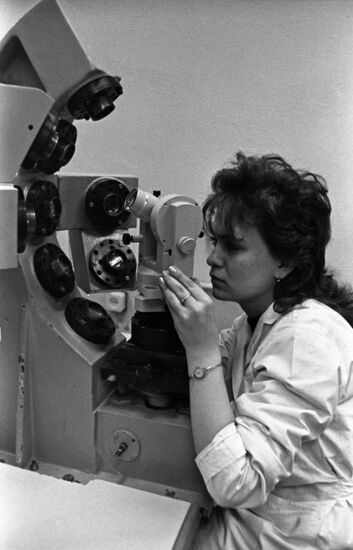
Kharkov Instrument-Making Plant named after Taras Shevchenko, Ukrainian SSR. A lab for testing measuring devices.15.10.1991#6685971
A design bureau of the Kharkov Instrument-Making Plant named after T. H. Shevchenko, Ukrainian SSR.01.07.1991#6691484
Kharkov Instrument-Making Plant named after T. H. Shevchenko, Ukrainian SSR. A shop producing electronic elements for microprocessor unit control.01.07.1991#6691479
Kharkov Instrument-Making Plant named after Taras Shevchenko, Ukrainian SSR. A shop producing endoscopic cameras for monitoring operation of machine closed units.15.06.1991#6685892
Shevchenko Kharkov Machine Building Plant, Ukrainian SSR. An employee of the laboratory for testing measuring instruments during work.01.10.1990#8301383
Shevchenko Kharkov Machine Building Plant, Ukrainian SSR. Laboratory for testing measuring instruments.01.10.1990#8301342
Shevchenko Kharkov Machine Building Plant, Ukrainian SSR. An employee of the laboratory for testing measuring instruments during work.01.10.1990#8301341
Shevchenko Kharkov Machine Building Plant, Ukrainian SSR. Levels produced by the factory for Cambodian builders.01.10.1990#8301338
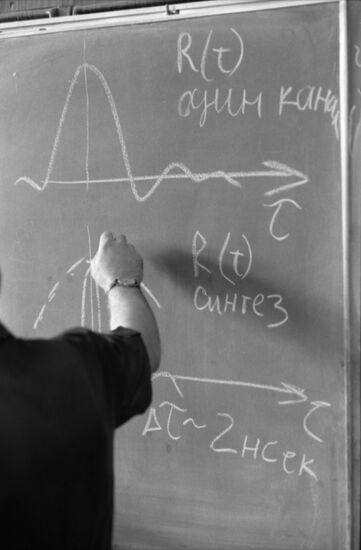
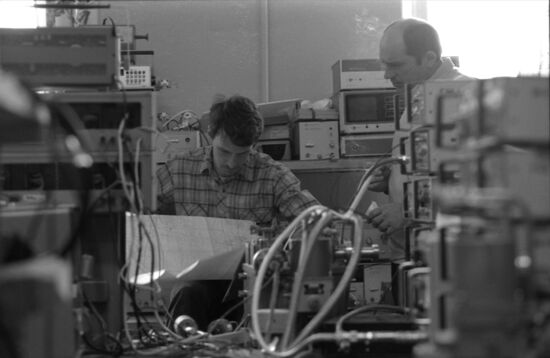
In the radio engineering systems laboratory at the Institute of Applied Astronomy, Soviet Academy of Sciences (now RAS). Researchers working on the Quasar-KVO system project intended for very-long-base radio interferometry, with three observatories far from each other forming a global radio telescope on an area of 12 million sq. km with observation points separated by more than 4,000 km. One observatory is located in Svetloye on the Karelian, another in Zelenchukskaya in the North Caucasus, and the Badary observatory (Republic of Buryatia) completes the giant triangle. (Quasar-KVO became the basis for the future Russian satellite navigation system GLONASS).29.09.1989#6549206
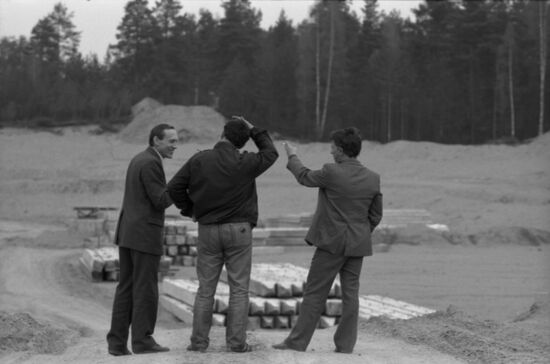
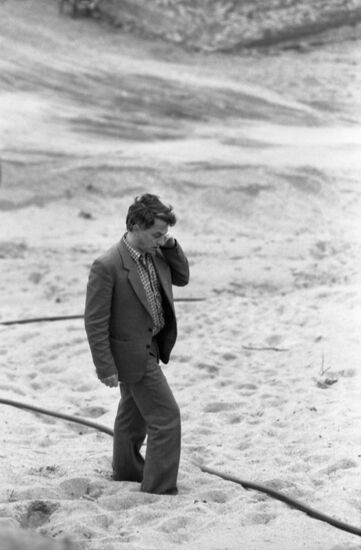
Construction of an observation station in the village of Svetloye on the Karelian Isthmus, the location one of the three observatories in the Quasar-KVO system project intended for very-long-base radio interferometry, forming a global radio telescope on an area of 12 million sq. km with observation points separated by more than 4,000 km. Another is in Zelenchukskaya in the North Caucasus, and the Badary observatory (Republic of Buryatia) completes the giant triangle. Right: head of the Quasar-KVO project Andrei Finkelshtein.29.09.1989#6549198
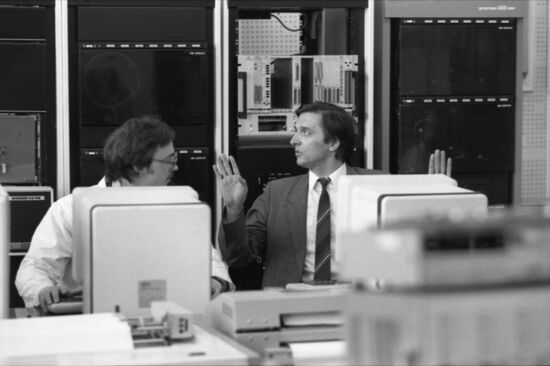
In the control computer systems laboratory at the Institute of Applied Astronomy, Soviet Academy of Sciences (now RAS). Researchers working on the Quasar-KVO system project intended for very-long-base radio interferometry, with three observatories far from each other forming a global radio telescope on an area of 12 million sq. km with observation points separated by more than 4,000 km. One observatory is located in Svetloye on the Karelian, another in Zelenchukskaya in the North Caucasus, and the Badary observatory (Republic of Buryatia) completes the giant triangle. (Quasar-KVO became the basis for the future Russian satellite navigation system GLONASS).29.09.1989#6549196
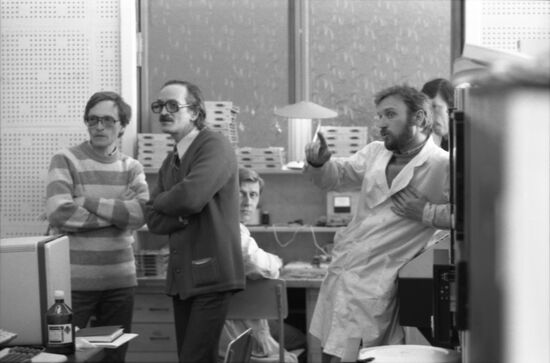
Institute of Applied Astronomy of the USSR Academy of Sciences (currently of the Russian Academy of Sciences). Work is underway on tthe Quazar-KVO project comprising three separate observatories making up a global radio telescope of the area of 12 million square kilometers with observation points over 4,000 km apart. The first observatory is located in Svetloye, Karelian Isthmus; the second one in Zelenchukskaya, North Caucasus, with Badary observatory in the Republic of Buryatia closing up the giant triangle. The Quazar-KVO project became the foundation of the future Russian satellite navigation system GLONASS.29.09.1989#6549189
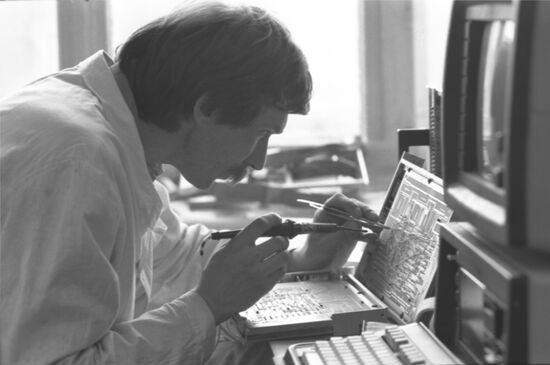
Laboratory of readio astronomy receivers at the Institute of Applied Astronomy of the USSR Academy of Sciences (currently of the Russian Academy of Sciences). Work is underway on the the Quazar-KVO project comprising three separate observatories making up a global radio telescope of the area of 12 million square kilometers with observation points over 4,000 km apart. The first observatory is located in Svetloye, Karelian Isthmus; the second one in Zelenchukskaya, North Caucasus, with Badary observatory in the Republic of Buryatia closing up the giant triangle. The Quazar-KVO project became the foundation of the future Russian satellite navigation system GLONASS.29.09.1989#6549187
Employees of the Institute of Applied Astronomy of the USSR Academy of Sciences (currently of the Russian Academy of Sciences). Work is underway on the the Quazar-KVO project comprising three separate observatories making up a global radio telescope of the area of 12 million square kilometers with observation points over 4,000 km apart. The first observatory is located in Svetloye, Karelian Isthmus; the second one in Zelenchukskaya, North Caucasus, with Badary observatory in the Republic of Buryatia closing up the giant triangle. The Quazar-KVO project became the foundation of the future Russian satellite navigation system GLONASS.29.09.1989#6549183
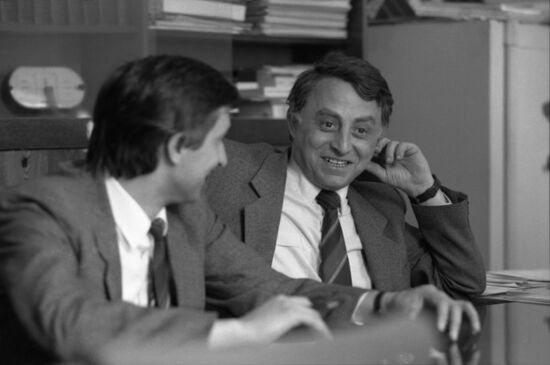
Andrei Finkelshtein, right, a Soviet and Russian scientist, Doctor of Mathematics and Physics, director of the Institute of Applied Astronomy of the USSR Academy of Sciences (currently of the Russian Academy of Sciences). In 1986 he was appointed head of the Quazar-KVO project comprising three separate observatories making up a global radio telescope of the area of 12 million square kilometers with observation points over 4,000 km apart. The first observatory is located in Svetloye, Karelian Isthmus; the second one in Zelenchukskaya, North Caucasus, with Badary observatory in the Republic of Buryatia closing up the giant triangle. The Quazar-KVO project became the foundation of the future Russian satellite navigation system GLONASS.29.09.1989#6549182
Andrei Finkelshtein, a Soviet and Russian scientist, Doctor of Mathematics and Physics, director of the Institute of Applied Astronomy of the USSR Academy of Sciences (currently of the Russian Academy of Sciences). In 1986 he was appointed head of the Quazar-KVO project comprising three separate observatories making up a global radio telescope of the area of 12 million square kilometers with observation points over 4,000 km apart. The first observatory is located in Svetloye, Karelian Isthmus; the second one in Zelenchukskaya, North Caucasus, with Badary observatory in the Republic of Buryatia closing up the giant triangle. The Quazar-KVO project became the foundation of the future Russian satellite navigation system GLONASS.29.09.1989#6549181
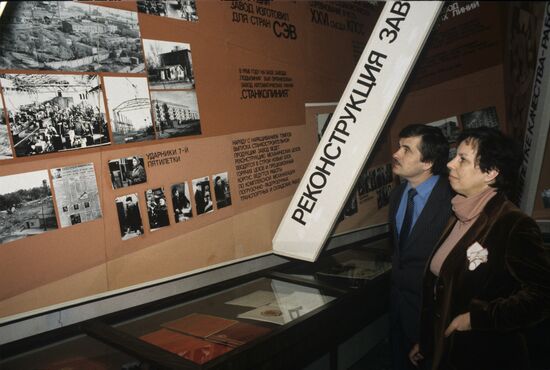
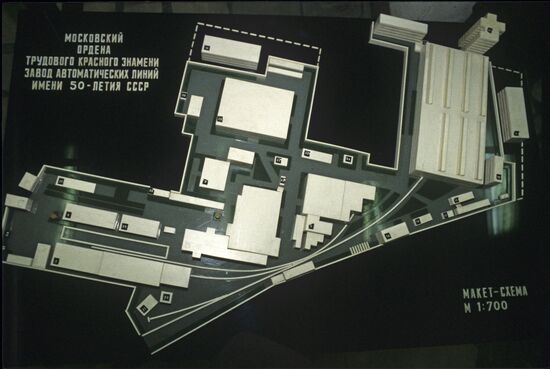
Exhibits of the museum of the Moscow plant of automatic lines named after the 50th anniversary of the USSR (production ceased in 2010).28.10.1987#8305884
Exhibits of the museum of the Moscow plant of automatic lines named after the 50th anniversary of the USSR (production ceased in 2010).28.10.1987#8305883
Moscow. The Anthropological Plastic Reconstruction Laboratory at the Miklukho-Maklai Ethnography Institute of the Soviet Academy of Sciences, now the Miklukho-Maklai Institute of Ethnology and Anthropology. Photo: Analyzing the distribution of soft facial tissues using a stereo-comparison device.10.03.1987#8584753
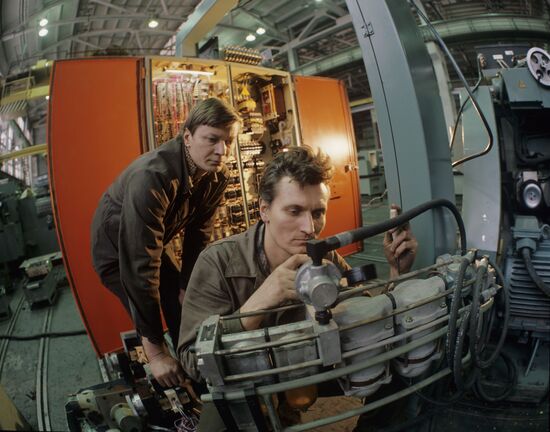
The Moscow Order of the Red Banner of Labor Plant of Automatic Lines named after the 50th Anniversary of the USSR (now the Moscow Plant of Automatic Lines and Special Machine Tools). Equipment setup.21.03.1986#8394920